
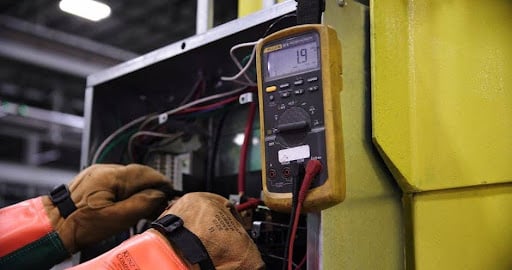
The demand for portable appliance testing across the UK shows no sign of slowing. Every workplace, school, rental property, and public venue contains electrical equipment that must be inspected regularly to comply with the Electricity at Work Regulations 1989.
Becoming a qualified engineer in PAT testing through a one-day accredited course opens a practical career path that requires no prior electrical experience, minimal startup investment, and offers the flexibility to work self-employed or as part of a larger organisation.
What Does It Mean to Be a Qualified PAT Testing Engineer?
A qualified PAT testing engineer is a person who has completed an accredited training course and demonstrated competence in the inspection and testing of portable electrical appliances. The qualification certifies that the delegate understands UK electrical safety legislation, appliance classification, testing procedures, and record-keeping requirements.
According to the Health and Safety Executive, there is no legal requirement for PAT testing to be carried out by a qualified electrician. Any person who has received appropriate training can competently perform PAT testing. This accessibility is what makes the qualification attractive to people from non-electrical backgrounds who want to add a practical, in-demand skill to their professional toolkit.
The course covers the IET Code of Practice for In-Service Inspection and Testing of Electrical Equipment, which is the technical standard that defines how PAT testing should be conducted in the UK. Delegates learn visual inspection techniques, how to operate a portable appliance tester, how to interpret results, and how to maintain the records that employers and insurers require.
What Does the Training Programme Cover?
The one-day course is structured to build competence progressively from legislation through to hands-on practical assessment:
- UK electrical safety legislation: the Electricity at Work Regulations 1989, the Health and Safety at Work Act 1974, and the Provision and Use of Work Equipment Regulations 1998.
- The IET Code of Practice: understanding the technical framework that governs how portable appliances are inspected and tested.
- Appliance classification: identifying Class I (earthed), Class II (double-insulated), and Class III (low voltage) equipment and the specific test requirements for each class.
- Visual inspection: systematic checking of plugs, cables, casings, switches, and earthing arrangements for visible signs of damage, wear, or incorrect wiring.
- Practical testing: operating a PAT tester to perform earth continuity, insulation resistance, and polarity tests. Delegates test real appliances under supervision.
- Record-keeping and compliance: labelling tested appliances, maintaining testing registers, and producing documentation that satisfies HSE guidance and insurance requirements.
By the end of the day, delegates hold a recognised qualification and can begin professional PAT testing immediately.
Which Industries Need Qualified PAT Testing Engineers?
The demand spans virtually every sector of the UK economy. Here is where the strongest opportunities exist:
- Property management: Landlords and letting agents need regular PAT testing across their rental portfolios. A qualified engineer with local availability becomes a preferred contractor.
- Education: Schools, colleges, and universities require annual testing of hundreds of appliances per campus. Many institutions contract local qualified engineers rather than maintaining in-house capability.
- Hospitality: Hotels, restaurants, pubs, and event venues use equipment in high-wear environments. Quarterly or annual testing schedules create consistent work throughout the year.
- Healthcare: NHS facilities, dental practices, GP surgeries, and care homes require rigorous compliance documentation alongside testing. Healthcare clients value qualified engineers who understand the sector’s documentation standards.
- Offices and retail: Every business with computers, printers, kettles, and portable heaters contains testable equipment. Corporate clients with multiple premises offer volume contracts.
According to the Federation of Small Businesses, small and medium-sized enterprises represent the largest market segment for PAT testing services because most lack the scale to justify full-time in-house capability.
What Earning Potential Does PAT Testing Offer?
Self-employed PAT testing engineers set their own rates and schedules. Most charge between £1 and £2.50 per appliance, with daily earnings depending on the number and size of client sites visited.
A typical day testing a small office (40 items) plus a medium-sized school (150 items) generates £250 to £450 in revenue. Engineers who build a regular client base of 15 to 20 recurring accounts can sustain annual earnings of £25,000 to £35,000 working four to five days per week.
The recurring nature of the work is the strongest financial advantage. Appliances require periodic retesting, so clients return annually. Each new client added to the portfolio increases the baseline income without requiring additional qualification or investment.
Quick Career Summary
- PAT testing requires a one-day course with no prior electrical experience needed.
- The qualification allows immediate professional work as a self-employed engineer or an in-house tester.
- Every UK sector needs qualified PAT testing engineers, with property, education, and hospitality offering the strongest demand.
- Self-employed engineers typically earn £25,000 to £35,000 annually with an established client base.
- Startup costs (course plus equipment) total under £1,000 and recoup within the first month of active work.
- Annual retesting creates recurring revenue that grows with each new client.
A Career Built on Compliance
Electrical safety compliance is not a trend. It is a permanent legal requirement that creates permanent demand for qualified professionals. PAT testing offers one of the shortest paths from training to earning in the UK trades and compliance sector.
FAQ
Do I need to be an electrician to become a qualified PAT testing engineer?
No. The one-day course is designed for complete beginners. Delegates learn all necessary skills from scratch, including legislation, testing techniques, and record-keeping.
How quickly can I start earning after completing the course?
Immediately. Many delegates begin contacting potential clients the week after qualifying. Most build their first clients within two to four weeks through direct outreach to local businesses and landlords.
Is the PAT testing qualification nationally recognised?
Yes. Accredited courses align with the IET Code of Practice, which is the standard referenced by the HSE. The qualification is recognised by employers, insurers, and regulatory bodies across the UK.
Can I combine PAT testing with another job?
Absolutely. The flexible scheduling makes PAT testing one of the most compatible supplementary qualifications available. Many engineers test during evenings, weekends, or days off from their primary employment.