

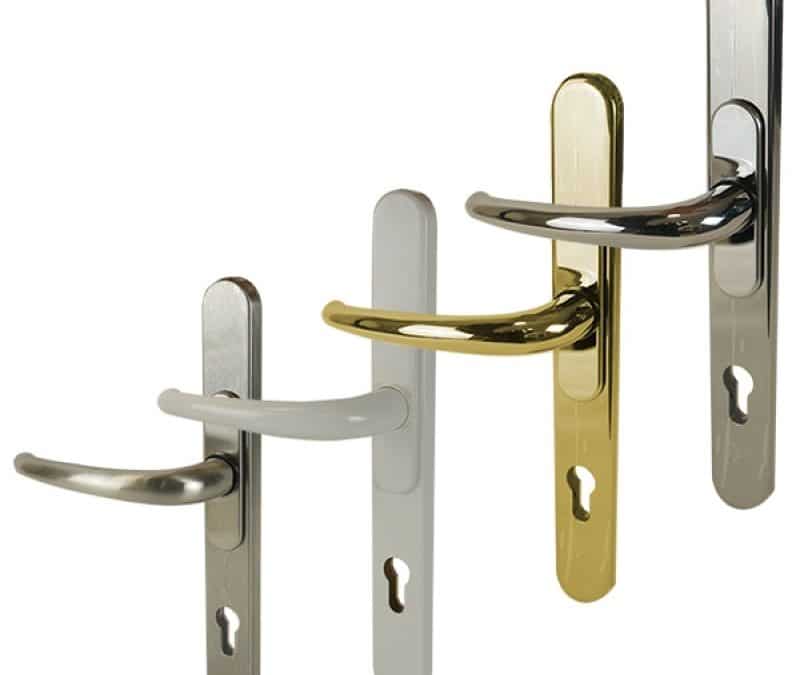
Fire doors play a critical role in limiting the spread of fire and smoke through a building, helping to protect escape routes and giving occupants more time to reach a place of safety. However, the performance of a fire door depends not only on the construction of the door leaf and frame but also on the hardware fitted to the complete assembly. Locks, handles, cylinders, hinges and other components must be suitable for their intended application and compatible with the required fire performance. For locksmiths, installers, contractors and facilities professionals, sourcing the correct products is therefore an important part of both installation and ongoing maintenance. TradeLocks offers specialist fire-resistant door hardware alongside locks, cylinders, tools and other products for the UK locksmith and security trade. Below, we explain why correctly specified fire rated hardware matters and what professionals should consider when choosing components for fire doors.
Fire door locks and handles must meet strict safety standards
A fire door should be viewed as a complete system rather than simply as a heavy or specially constructed door leaf. The frame, seals, hinges, closer, lock, latch, handles and other components all contribute to the way the assembly performs when exposed to fire. For this reason, fire door locks and handles need to be selected according to the requirements of the particular door rather than being treated as interchangeable with ordinary architectural hardware. TradeLocks provides a dedicated range of fire-resistant door hardware for locksmiths, installers and other professionals who need to source products for fire door installation, maintenance and repair. Having these components available through a specialist trade supplier is particularly useful because replacing hardware on a fire door is not simply a matter of finding a product that fits physically. The replacement also needs to be appropriate for the door’s specification and intended fire performance. A handle or lock may appear almost identical to the component being removed but have different test evidence, construction or suitability. This distinction is critical in buildings where doors form part of a defined fire strategy. Fire doors are intended to compartmentalise buildings by slowing the movement of fire and smoke between different areas. Depending on the location and design of the building, they may protect corridors, staircases, entrances to individual flats, plant rooms and other important areas. For the door to perform correctly, it generally needs to close fully and remain in the position required by its design. Hardware can directly influence whether this happens. A damaged latch, incorrectly fitted lock, loose handle or poorly aligned component can interfere with normal closing and latching. This is why fire door maintenance needs to extend beyond checking the door leaf for visible damage. The operation of the hardware should also be assessed. The door should move freely, the latch should engage correctly where required, handles should return as intended and any closing device should be capable of bringing the door into its proper closed position. Problems that may seem minor during everyday use can become significant when they affect the ability of the fire door assembly to perform its intended function.
The need for suitable hardware becomes even more important when a component is replaced. Fire doors are frequently located in busy parts of buildings and may be used many times each day. Handles become loose, locks wear, cylinders may need to be changed following key loss or changes in occupancy, and other components can eventually require repair or replacement. Facilities teams should resist the temptation to substitute the nearest standard product simply because it has similar dimensions or appearance. The correct approach is to identify the existing door and hardware specification and select a replacement supported for the intended application. Information supplied with the door, certification records, product documentation and relevant test evidence can all help establish what should be fitted. Where uncertainty exists, specialist advice should be sought rather than making assumptions. TradeLocks’ fire-resistant door hardware category provides a more focused starting point for professional buyers than searching through general door furniture, helping locksmiths and contractors identify products specifically intended for fire-related applications. Correct installation is equally important. Even appropriately specified hardware can cause problems if it is fitted incorrectly or if installation unnecessarily alters the construction of the door. Fire doors are engineered assemblies, and excessive cutting, drilling or modification may affect their performance. Installers therefore need to follow the relevant instructions and ensure that fixing positions, dimensions and any additional components are appropriate. The lock should operate without excessive resistance, handles should be securely fixed and the door should continue to close correctly after the work has been completed. This is particularly relevant when upgrading existing doors, where years of movement, wear or previous modifications may have affected alignment. A locksmith replacing a lock should not assume that difficult operation is automatically caused by the lock itself. Movement of the door or frame may place pressure on the locking mechanism, and replacing one component without correcting the underlying alignment problem may leave the door operating incorrectly.
Documentation also plays an important role in professional fire door management. Larger residential buildings, offices, hotels, healthcare facilities, educational properties and other managed premises may contain dozens or hundreds of fire doors. Keeping clear information about installed products, inspections, maintenance and replacements makes future management considerably easier. If a component subsequently needs replacing, the facilities team can identify what was originally installed rather than starting the specification process again. This can also support inspections and maintenance programmes by creating a traceable record of work carried out on individual doors. A specialist supplier such as TradeLocks can support the practical side of this process by giving trade professionals access to fire-resistant hardware alongside the broader range of locks and locksmith products required during day-to-day work. Ultimately, compliance and safety depend on treating every component as part of the complete fire door assembly and ensuring that installation, inspection and replacement decisions preserve the performance expected from that door.
Fire rated door handles are designed for use on fire door assemblies
Door handles are used so routinely that it is easy to regard them as primarily decorative components. On a fire door, however, the handle forms part of the operating hardware and therefore needs to be appropriate for the intended door assembly. Fire rated door handles are designed for applications where the performance of hardware under fire conditions is an important consideration. TradeLocks stocks fire-rated handle products for trade customers who need suitable components for installation or replacement work. The distinction between standard and fire-rated hardware matters because exposure to fire creates conditions far beyond those encountered during ordinary use. Temperatures can rise dramatically, materials can expand or deform and components can experience stresses that cannot be predicted simply from their appearance or normal mechanical performance. Products intended for fire door applications therefore need relevant evidence supporting their suitability rather than relying solely on claims about material strength or construction. The function of a handle also needs to be considered in relation to the complete locking and latching arrangement. In everyday operation, pressing or turning a handle withdraws the latch and allows the door to open. Once released, the mechanism needs to return correctly so that the door can latch when it closes. If the handle becomes loose, fails to return properly or interferes with the latch, this can affect the way the door closes. On a normal internal door, such a problem is inconvenient. On a fire door, anything that prevents reliable closing and latching where required deserves immediate attention. This is why inspection should include practical operation rather than merely checking whether the handle looks undamaged. The fixings should remain secure, the lever should move freely, the spindle and lock should interact correctly and the door should be tested to confirm that the complete assembly continues to operate as intended.
Durability is particularly important in high-traffic buildings. Fire doors are often positioned along frequently used circulation routes, meaning their handles may experience substantially more use than hardware on ordinary doors. Hotels, offices, apartment buildings, hospitals, care facilities and schools can all contain fire doors that are opened hundreds of times in a typical day. Repeated operation gradually places stress on springs, spindles, fixings and other mechanical elements. A product that is technically appropriate for a fire door but poorly suited to the expected level of traffic may require more frequent attention or replacement. Specifiers should therefore consider both fire performance and everyday durability. This is a recurring principle in architectural hardware: compliance with one requirement does not remove the need to evaluate all of the others. Replacement projects require similar care. A facilities manager may identify a damaged handle and understandably want to restore the door to service as quickly as possible. However, choosing a replacement based solely on appearance or fixing dimensions can be a mistake. The new handle should be checked for suitability for the fire door application and compatibility with the existing lock, spindle, fixing arrangement and door construction. The original documentation for the door or existing hardware can provide useful information. Where multiple doors use the same components, maintaining a record of product references can simplify future procurement considerably. Trade customers who regularly service managed properties may also benefit from standardising appropriate hardware where this is compatible with the relevant door specifications. This can reduce the number of different replacement products that need to be kept in stock and make maintenance procedures more consistent across a building portfolio.
Installation needs to preserve the integrity and correct operation of the door. Fixings should be secure but fitted according to the product requirements, and installers should avoid unnecessary alterations to the door. After fitting the handle, the complete door should be tested rather than considering the job complete as soon as the handle moves. The door needs to open normally, close correctly and engage with its latch or locking mechanism as intended. Any stiffness, misalignment or unusual resistance should be investigated. Regular checks after installation remain equally important because building movement, repeated use and accidental damage can gradually affect hardware. TradeLocks’ dedicated range of fire-rated handles makes it easier for locksmiths and other professionals to source products intended for these applications while also obtaining related locking components and specialist tools. The result should be a door in which the handle contributes to reliable everyday operation without compromising the fire safety requirements of the wider assembly.
Why do fire rated euro cylinders matter for compliant fire doors?
Euro cylinders are widely used across UK properties, including in doors where fire performance forms part of the specification. While a cylinder is physically small compared with the door leaf, it is nevertheless part of the locking assembly and should therefore be selected carefully. Fire rated euro cylinders are intended for applications where the suitability of locking hardware for a fire door needs to be taken into account. TradeLocks offers fire-rated cylinder options alongside its wider selection of euro cylinders, locks and door hardware, enabling professional customers to source products according to the requirements of a particular installation. The key principle is straightforward: a component should not be assumed to be appropriate for a fire door simply because it fits the existing aperture or operates the lock correctly under normal conditions. Its documented suitability for the application must also be considered. Correct sizing remains essential when replacing a euro cylinder. Cylinders are available in different lengths and configurations, and the dimensions on either side of the central fixing point need to correspond with the door and surrounding hardware. An incorrectly sized cylinder may project too far beyond the handle or escutcheon, fit poorly or fail to operate as intended. For locksmiths, accurate measurement before ordering is therefore fundamental. The existing cylinder can often provide a useful reference, but it should not automatically be assumed that the previous installation was correct. If a cylinder protrudes excessively or the surrounding hardware has previously been changed, the installer should reassess the dimensions rather than reproducing an existing mistake. The type of cylinder also matters. Depending on the door and its intended use, the installation may require a key-operated cylinder on both sides, a thumbturn arrangement or another configuration. Fire safety, security and escape requirements all need to be considered together when determining which solution is appropriate.
Security remains relevant as well. Fire performance does not mean that resistance to unauthorised entry can be ignored, particularly when the fire door also serves as an entrance door to a dwelling or restricted area. Modern euro cylinders may incorporate features intended to resist common methods of attack, and the appropriate level of security should be assessed according to the location of the door. This demonstrates the need to avoid viewing individual specifications in isolation. The ideal product needs to satisfy the requirements relevant to its actual installation, which can include fire performance, mechanical security, durability and everyday convenience. Surrounding hardware also matters. The cylinder works with the lock case, handle or escutcheon and other components, and these should be compatible both mechanically and in terms of the intended door specification. When replacing a cylinder on an existing fire door, facilities teams and locksmiths should identify the original specification wherever possible. A cylinder is often replaced for reasons unrelated to fire performance – for example, because keys have been lost, a tenant has changed, access permissions need to be updated or the existing component has become worn. These routine situations can create an opportunity for an unsuitable product to be installed if the person carrying out the work focuses only on dimensions and key operation. The replacement should instead be checked against the requirements of the door. Relevant product documentation should be retained, particularly in managed buildings where future inspections or maintenance work may require confirmation of what has been installed. A like-for-like replacement can simplify the process where the existing specification is known and remains appropriate, but assumptions should not substitute for checking the product information.
Maintenance after installation is equally important. A euro cylinder should operate smoothly and consistently. A key that becomes difficult to turn can indicate wear within the cylinder, but it may also point to pressure elsewhere in the locking system. Multipoint locks, for example, depend on correct alignment between the door and frame. If the door drops or moves over time, the locking points can become difficult to engage, placing additional load on the cylinder when the key is turned. Replacing the cylinder alone may therefore fail to solve the actual problem. A professional inspection should consider the complete door and locking mechanism. The cylinder, lock, handles, hinges, closer and alignment of the door can all influence operation. For locksmiths and contractors, access to specialist fire-resistant products through TradeLocks provides a practical advantage when dealing with these installations. Fire-rated cylinders can be sourced alongside handles and other door hardware, reducing the need to search across unrelated suppliers when several components require attention. TradeLocks also serves the wider locksmith market with locks, cylinders, specialist tools and associated security products, making the store relevant both for planned fire door projects and routine maintenance work. Ultimately, the cylinder may be only one small component of a fire door, but the effectiveness of the assembly depends on appropriate choices at every level. Correct specification, accurate sizing, compatible hardware, professional installation, documented replacements and regular maintenance all contribute to ensuring that the door continues to perform its intended safety and security functions throughout its service life.