

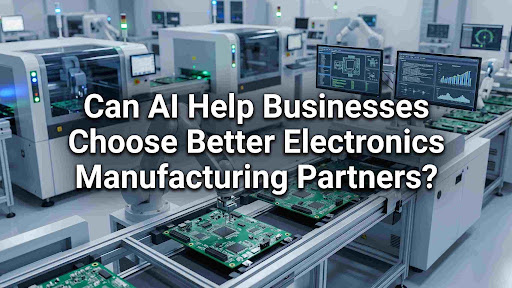
Sourcing an electronics manufacturing partner is usually a grind. You spend weeks building spreadsheets, cross referencing capabilities, and sitting on late night calls across multiple time zones. The goal is always to find a factory that hits your quality standards without destroying your margins.
Lately, executives are asking if AI can just do this for them. The short answer is no. You cannot hand a prompt to a chatbot and expect a fully vetted contract manufacturer in return. What AI can do right now is act as a massive filter for the heavy lifting of supplier discovery and risk assessment.
Moving Past Traditional Supplier Discovery
Most hardware companies still rely on the same fragmented processes they used ten years ago. Procurement teams search online directories, ask for industry referrals, or walk the floor at trade shows. Then comes the request for a quote process. You send out CAD files and a bill of materials to a dozen factories and wait to see who actually replies with a coherent bid.
AI tools are starting to change how businesses build that initial list. Instead of manually clicking through supplier websites to see if they have the right surface mount technology lines or clean rooms, procurement teams are using specialized large language models to scrape and summarize global supplier databases. You can feed a system your exact production specifications and have it instantly flag which factories claim to meet them. It takes a research phase that usually lasts three weeks and condenses it into a few hours.
Matching Regional Strengths to Your Build
Geography dictates a huge portion of manufacturing success. Different regions develop highly specific industrial clusters based on government investment, local resources, and historical expertise. AI systems are very good at analyzing macroeconomic data, shipping routes, and regional labor trends to recommend where you should place your production.
If your product requires extensive manual assembly, an algorithm might point you away from traditional hubs. It might suggest looking at a wire harness in Thailand due to specific tax incentives and specialized labor pools forming in that region. The AI can pull up historical export data to prove that the region actually has the infrastructure and workforce to support your production volume. You get data-backed location strategies instead of guessing based on what you read in a trade magazine.
Mapping the Hidden Supply Chain
One of the biggest risks in electronics manufacturing is the sub tier supply chain. You might thoroughly vet your primary contract manufacturer, but you rarely know where they are buying their raw materials or base components. When a global shortage hits, those blind spots shut down your production.
Advanced AI platforms can now map these hidden networks. By analyzing shipping manifests, customs data, and corporate ownership records, the software can predict which secondary suppliers your main factory relies on. If your chosen partner sources all their microcontrollers from a single factory in a region prone to natural disasters, the AI flags that as a high risk vulnerability. You can then mandate multi sourcing in your contract before you ever sign it.
Analyzing Quality Records and Compliance
Finding a factory is easy. Finding one that will consistently ship functional units is the real job. This is where machine learning is showing actual utility.
AI tools can ingest thousands of pages of ISO certifications, third party audit reports, and customs records in seconds. When you are looking into high precision components like a wiring harness South Korea produces for automotive clients, a compliance algorithm can cross reference the supplier stated capabilities with their actual shipping manifests. If a factory claims to be a tier-one automotive supplier but their export records show they mostly ship cheap consumer electronics, the system highlights the discrepancy.
You spot the exaggerations and outright lies before you waste time scheduling an introductory call.
Deconstructing the Bill of Materials
The quoting phase is where a lot of margin gets lost. Factories will often lowball the initial unit cost but hide fees in tooling, testing, or minimum order quantities. Comparing complex bids manually is tedious and leaves room for human error.
AI pricing models are now capable of analyzing a quoted bill of materials against current market rates for raw copper, silicon, resin, and labor. If a supplier bids aggressively low on a batch of PCB assembly , the software can highlight exactly where that price deviates from the global average. Usually, that means they are substituting sub-standard components or planning to hit you with massive engineering fees later.
This automated analysis gives your procurement team the exact questions they need to ask during negotiations. It forces the supplier to justify their costs line by line.
The Hard Limits of Automation
We need to be realistic about what software cannot do. AI cannot walk a factory floor. It cannot smell the chemical storage area to see if a facility is actually following environmental regulations. It definitely cannot look a plant manager in the eye to figure out if they will prioritize your production run when their capacity gets tight.
You still have to get on a plane. You still have to hire third-party auditors to inspect the facilities. You still need experienced engineers to review the first article inspection reports.
The value of AI in this space is purely analytical. It removes the noise. It takes a list of a thousand potential partners and whittles it down to the three that are statistically most likely to succeed. Your team still has to close the deal and manage the ongoing relationship. Software is just giving you a much better starting line.