
A high-street owner posts a sunny thirty-second walkthrough of the counter. The light is good, the shelves look full, and by Tuesday the clip has a few polite views and no extra footfall. The problem was rarely the camera. It was that the video never asked the viewer to do one clear thing by one clear time.
Local audiences on TikTok, Reels and Shorts move fast. They will forgive a simple phone shot. They will not invent your offer for you. Before anyone films again, settle the ask. Then choose the shortest honest way to put that ask on screen—including, when nobody wants to appear, a draft made from photos.
Decide the one ask first
Finish this sentence once: “After this clip, a passer-by should ___.” Fill it with a single action tied to place and timing—collect the Saturday loaf before four, book a table for Friday, or remember the stall now opens on Thursdays. If you need “and” more than once, you have two clips, not one.
Write that sentence into a note you will keep. Every later decision—shots, captions, whether you use a generated draft—exists only to serve it. “Come and see us sometime” is not an ask; it gives no reason to act today.
Lock the facts you must not get wrong
List what a stranger might act on, and check each line against a printed source: the door sign, the till receipt, the booking screen.
- Business name, spelled as on the shopfront
- Street plus one landmark that finds the door
- Opening days and times, including bank-holiday changes
- Offer dates and any price you show
- Consent from anyone whose face appears
- Music rights that cover social platforms
Type critical spellings and times yourself as on-screen text or in the caption. Generated lines and auto-captions are where names and hours go wrong, and a wrong opening time costs more goodwill than a plain video.
Draft a hook that serves the ask
You now need something to test—not a perfect brand film. Three common routes:
- Phone footage of the product, the door or a willing face in the first three seconds.
- Still photos as a short slideshow with typed facts over the end.
- A performed draft from photos when staff will not appear on camera, or when you want a second hook to compare.
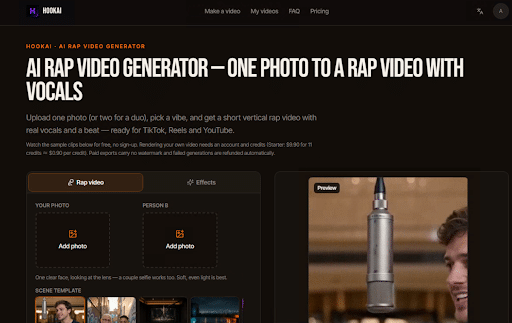
For the third route, an ai rap video generator such as Hookai can take one clear photo—or two for a duo—plus a theme or stage and a short line about the offer, then return a vertical clip with an original beat and lip-synced bars. Treat that output as a draft hook to judge, not as a substitute for your real catalogue or your real voice at the till.
Keep the pasted idea to one sentence with the name, the date and one memorable detail. Long price lists will not fit twelve seconds. Watch the render twice: check faces, names and dates, and whether the tone matches a quiet bakery or a lively stall. If a fact is wrong, the fact wins—simplify the line and generate again, or fall back to phone footage.
Run four checks before you publish
- Sound off: a muted viewer still knows what the business is and what to do.
- Three seconds: the open shows product, place or a face—not a logo on empty colour.
- Stranger: someone who does not know the shop can answer what, where and when after one play.
- Claims: nothing says “best in town” unless you can stand behind it.
A draft that fails the stranger test twice usually needs a clearer ask, not more effects. Change one element and test again.
Keep the note; change two lines next season
Phone clips, photo slideshows and a photo-to-performance draft from Hookai all pass through the same gate: one ask, checked facts, a quick draft, four tests. Save the sentence and the fact list together. When the autumn menu becomes a Christmas order deadline, you edit two lines instead of inventing a new brief, and a Saturday assistant can follow the same note.
Short video for a local shop is not about looking glossy. It is about asking for one thing, getting the hours right, and giving people a reason to stop scrolling before the week’s offer has already gone.