
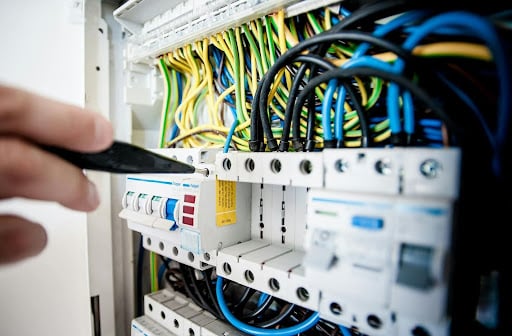
Tucked away in a hallway cupboard, garage, or utility room, the consumer unit (what used to be called a “fuse box”) is one of the most important — and least understood — components in any home. It’s the central point where electricity from the grid enters your house and is safely distributed to every circuit, while also protecting you and your property from electrical faults. Modern consumer units are vastly more sophisticated than the fuse boxes of decades past. With help from Alert Electrical, a leading retailer of electrical equipment, here’s a detailed look at how a consumer unit works and what can be found inside one.
What Is a Consumer Unit?
A consumer unit is essentially a distribution board: a metal or high-grade plastic enclosure containing the switches, breakers, and protective devices that control and safeguard the electrical circuits throughout your home. Mains electricity enters the unit via the main switch, and from there it’s split into individual circuits — lighting, sockets, cooker, shower, and so on — each protected by its own device.
The shift from old-style fuse boxes (with rewireable fuses or simple miniature circuit breakers) to modern consumer units has been driven largely by updated wiring regulations, which now require much higher levels of protection against both electric shock and fire.
Key Components and Their Functions
Main Switch
This is the master on/off switch for the entire installation. Flipping it cuts power to every circuit in the consumer unit simultaneously — essential for safely carrying out electrical work or in an emergency.
Miniature Circuit Breakers (MCBs)
MCBs protect individual circuits against overcurrent — that is, too much current flowing through a cable, usually caused by a short circuit or an overloaded circuit. When current exceeds the rated threshold, the MCB trips, automatically cutting power to that circuit. Unlike old rewireable fuses, MCBs can simply be switched back on once the fault is cleared, rather than requiring a fuse wire replacement. They’re rated by amperage (commonly 6A, 16A, 20A, 32A) depending on what the circuit serves.
However, MCBs have a limitation: they protect against overcurrent and short circuits, but they do not protect against earth leakage — situations where current escapes the circuit and could pass through a person’s body, causing electric shock.
Residual Current Devices (RCDs)
This is where RCDs come in. An RCD constantly monitors the current flowing out through the live wire and back through the neutral wire of a circuit. Under normal conditions, these should be equal. If current is leaking somewhere — for instance, through a person who has touched a live wire, or through damaged insulation — the RCD detects this imbalance and disconnects the supply within milliseconds, well before a dangerous shock can occur.
In many consumer units, a single RCD protects a whole bank of circuits. This offers good shock protection but has a downside: a fault on one circuit can trip the RCD and cut power to every other circuit sharing it, plunging multiple areas of the house into darkness at once.
RCBOs: The Best of Both Worlds
This is where RCBOs (Residual Current Breakers with Overcurrent protection) come in, and they’re increasingly the standard choice in modern consumer unit design.
What is an RCBO?
Made by manufacturers such as Niglon, an RCBO is a single device that combines the functions of an MCB and an RCD into one unit. In other words, it provides:
- Overcurrent protection — tripping in response to short circuits or overloaded circuits (like an MCB)
- Earth leakage protection — tripping in response to current imbalance that indicates a shock risk or earth fault (like an RCD)
How RCBOs protect homeowners and the electrical system:
- Individual circuit protection: Each circuit in the home gets its own dedicated RCBO, rather than sharing protection with several other circuits. This means if a fault occurs on, say, the kitchen socket circuit, only that circuit trips — the lighting, other sockets, and the rest of the home remain unaffected.
- Faster fault isolation: Because protection is isolated per circuit, it’s much easier to identify which circuit has the fault. There’s no need to go through a process of elimination across multiple circuits sharing one RCD.
- Comprehensive protection without compromise: Homeowners get full shock protection (earth leakage detection) on every single circuit, rather than having to choose between full RCD coverage with the risk of widespread tripping, or split-board layouts that leave some circuits less protected.
- Reduced nuisance tripping disruption: While RCBOs can still trip due to genuine faults, the impact is contained to one circuit, meaning your fridge, freezer, or alarm system on a separate circuit will keep running even if another circuit develops a fault.
- Compliance with modern wiring regulations: Current UK wiring regulations (BS 7671) require RCD protection for the vast majority of circuits in domestic properties, including socket outlets, circuits in bathrooms, and cables buried in walls at shallow depth. RCBOs are an efficient way to achieve this circuit-by-circuit.
Surge Protection Devices (SPDs)
Many modern consumer units now also include a surge protection device. This guards sensitive electronics — computers, TVs, smart home equipment — against voltage spikes caused by lightning strikes or switching events on the grid. SPDs are increasingly required by regulations, particularly in homes with a lot of electronic equipment or renewable energy systems like solar panels.
Bus Bars
These are the internal copper bars that distribute live, neutral, and earth connections to each protective device within the unit. They ensure consistent, reliable power distribution across all circuits.
Enclosure and Fire Containment
Modern consumer units are required to be made of non-combustible material (typically metal) or housed within a non-combustible enclosure. This is a direct response to past incidents where electrical faults inside plastic consumer units contributed to house fires. The metal casing helps contain any internal fault, smoke, or fire, preventing it from spreading into the rest of the property.
Putting It All Together: A Typical Modern Layout
A modern domestic consumer unit will typically include:
- A main switch to isolate the whole installation
- Individual RCBOs for each circuit (lighting circuits, ring or radial socket circuits, cooker circuit, shower circuit, EV charger circuit, etc.)
- Possibly a surge protection device
- Clear circuit labeling, helping homeowners and electricians quickly identify which device controls which part of the house
This layout maximizes safety, minimizes disruption when something does go wrong, and makes faultfinding far simpler than in older systems.
Why This Matters for Homeowners
Beyond compliance with regulations, the practical benefits for homeowners are significant:
- Safety: RCBOs dramatically reduce the risk of electric shock and electrically-caused fires by responding within milliseconds to dangerous faults.
- Convenience: A fault in one room won’t black out the whole house.
- Future-proofing: Modern consumer units are better equipped to handle the demands of contemporary homes — EV chargers, solar inverters, smart home devices — all of which place more complex demands on the electrical system than older homes were designed for.
- Peace of mind: Knowing each circuit is individually protected against both overload and shock risk offers reassurance, particularly in homes with families, older wiring, or older properties undergoing renovation.
When Should You Consider an Upgrade?
If your home still has an older-style fuse box with rewireable fuses, or a consumer unit with a single RCD protecting multiple circuits, it may be worth having a qualified electrician assess whether an upgrade is appropriate — particularly if you’re renovating, adding circuits (such as for an EV charger), or simply want the improved safety and convenience that individual RCBO protection provides.
The Bottom Line
The consumer unit might not be the most glamorous part of a home, but it’s arguably one of the most important for safety. The evolution from simple fuse boxes to modern units equipped with RCBOs, surge protection, and fire-resistant enclosures reflects decades of lessons learned about how to better protect both people and property. Understanding what’s inside that unassuming metal box — and what each component does — can help homeowners make informed decisions about maintaining, upgrading, or simply better appreciating the safety system quietly working behind the scenes in their home.