
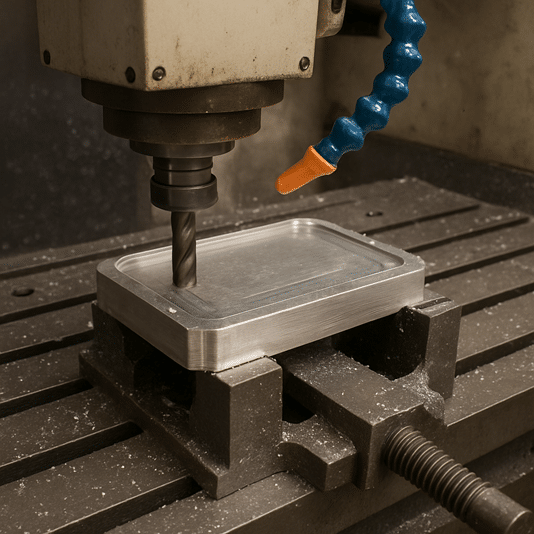
Prototype delays rarely come from one big mistake. Most of the time, the schedule slips because of many small gaps that add up: unclear tolerances, missing notes on surfaces, deep pockets that take longer than expected.
Design for Manufacturability: Streamlining Your Prototype for CNC
Design for manufacturability (DFM) optimizes prototype designs for efficient CNC machining. Emphasizing simplicity in design reduces production complexity and enhances speed. Minimizing intricate details where unnecessary can lead to faster machining.
Collaborating closely with CNC engineers during design stages helps. Their insights can highlight potential design pitfalls early, ensuring the prototype is machining-ready. Engaging these experts at the right time is crucial.
Designing with CNC capabilities in mind improves prototype quality and cuts production time. This proactive approach integrates functionality with manufacturability, leading to a smoother workflow.
Efficient design saves both time and resources, making prototypes not only easier to produce but also more reliable. Streamlining designs for manufacturability ensures the final product can be made with precision and speed, meeting market demands swiftly.
When you review machining capability for a prototype supplier, focus on clarity rather than marketing claims. Ask how they plan to hold the part, how they define datums, and which features they see as risk points. A supplier who asks the right questions early is usually faster overall, because fewer surprises appear mid-build. If you want a reference for typical CNC prototype workflows and what to include in a quote package, this overview is a helpful starting point: Xinprototype CNC milling machining.
Set Reasonable Tolerances
The good news is that prototype lead time is often controllable. You do not need a perfect design. You need a design package that is easy to quote, easy to machine, and easy to inspect. When those three things line up, the build becomes predictable.
A common reason lead times grow is “tolerance fog.” Engineers know which features matter, but the drawing does not always show it clearly. A prototype might only need three critical interfaces to fit, yet the drawing calls tight tolerances everywhere. That pushes machining time up, and it increases inspection work. A practical approach is to separate what is truly critical from what is “nice to have.” If a mating face and two hole positions control assembly, mark them as critical. Then let the rest follow standard tolerances. This does not reduce quality. It focuses quality where it creates value.
Another hidden driver is internal geometry. Many parts look simple in CAD, but a machine sees them differently. Sharp internal corners force a shop to use smaller cutters. Smaller cutters mean slower feeds, more tool deflection, and more time. If the design allows it, adding a modest internal fillet can save surprising amounts of machining time. The same is true for deep, narrow pockets. Deep pockets require long tools, and long tools are less stable. If the pocket depth is not function-critical, reducing it even slightly improves stability and speeds up the cut.
Setup count matters more than most people think. Every time a part is re-clamped, you add risk: datums can shift, soft jaws can leave marks, and the shop must re-verify alignment. It is worth asking a simple question during design review: “How many orientations will this need?” If a part needs machining on multiple faces, consider whether one face can become the main datum and whether key features can be reached from fewer angles. On many prototypes, a small design adjustment can turn a three-setup part into a two-setup part, and that often shortens lead time more than any other change.
Choosing the Right Materials for Fast, Effective CNC Prototypes
Material choice also plays a role in speed. Stainless steel is excellent for strength, wear, and corrosion resistance, but it can take longer to machine than aluminium. If the prototype’s main goal is fit and basic function, many teams use aluminium first, then move to stainless once the design is stable. If your product will face corrosion or heavy use, stainless from the start can be the right call, but it is best to plan for its machining reality: tool wear is higher, cutting speeds differ, and cycle times can rise.
Inspection is the other side of the same coin. “Full inspection” sounds safe, but it can slow things down and still miss what matters. A better method is to specify the inspection points that control performance. For example, call out hole position for assembly, flatness for sealing, and any threads that must hold torque. If you need a first article inspection, say so clearly and define what should be measured. This gives the supplier a clear target and reduces the chance of rework.
A Completed RFQ Package
The RFQ package you send is often the fastest way to improve lead time. A strong RFQ does not need to be long. It needs to be complete. A STEP file helps, but it should be paired with a simple 2D drawing that highlights critical dimensions and datums. Add material grade, finish requirements, and the quantity. If a surface is cosmetic, label it. If the part mates with another component, describe how. These small notes prevent the supplier from guessing. Guessing is where delays begin.
It also helps to align expectations about iteration. Prototyping is a loop. Changes are normal. The most common “human” mistake is version confusion: the shop uses an older file, or an update is not clearly confirmed. A simple version label on the file name and a short change note can prevent a costly restart. It is not paperwork. It is risk control.
Design complexity can also impact lead times. Simplifying designs where possible can streamline production. This doesn’t mean sacrificing quality. Rather, it involves intelligent design decisions. Balancing complexity and efficiency is key to effective CNC prototyping.
Selecting the ideal material can significantly reduce CNC prototyping lead times. Materials vary widely in machinability, affecting speed and ease of production. Soft, machinable metals or plastics often expedite the process.
Consider both functionality and ease of machining when selecting materials. The material must suit the prototype’s final purpose while not hindering production speed. Balancing these factors can lead to efficient prototyping.
Leveraging Advanced CNC Technologies for Rapid Prototyping
Embracing advanced CNC technologies can dramatically reduce prototype lead times. Five-axis machining, for instance, allows for creating complex geometries quickly. This enables engineering teams to explore more innovative designs.
High-speed CNC machines boost efficiency by decreasing processing times while maintaining precision. These technologies help produce multiple iterations swiftly, advancing the prototyping process significantly. The result is faster cycles from design to production.
Quality Control Without Compromise: Ensuring Precision in Every Prototype
Maintaining high standards in CNC prototyping is essential. Precision ensures that every prototype meets exact specifications. This accuracy is crucial for successful product development.
Implement robust quality control measures to achieve this precision. Regular inspections and testing are critical parts of the process. These steps help identify any deviations early, minimizing costly errors.