
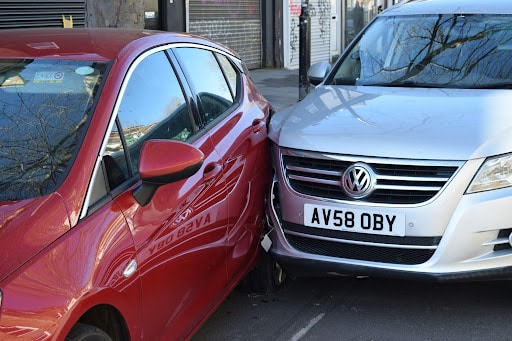


When cars collide on the busy streets of Lexington, SC, the damage left behind tells a story. Every dent, scratch, and shattered headlight acts as a clue about what happened in the moments leading up to the crash. Understanding how vehicles move and where they collide is a major part of determining who should pay for the damages. For drivers evaluating vehicle safety and repair considerations after such incidents, dealerships like Boerne Dodge can offer insights into modern safety features and post-collision support.
This process is known as crash direction analysis, and it plays a huge role in local legal cases. Investigators analyze impact angles and final resting positions to reconstruct events, such as speed or right-of-way violations. This information helps people understand who is responsible under South Carolina law.
How Does Impact Angle Determine Who Is At Fault?
The impact angle serves as foundational physical evidence in Lexington car accident claims, often revealing who had the right of way or failed to yield. By analyzing crash patterns, specialists can determine if a collision was head-on, rear-end, or a side-impact, which helps assess the consistency of the driver accounts in the police report.
Because these details directly influence fault determination, a Lexington car accident lawyer at Stewart Law Offices, with decades of experience, can assist individuals in interpreting this evidence and building a strong case. You can visit their website for more information. Accurate interpretation of impact angles can also expose attempts to misrepresent the sequence of events. This technical analysis strengthens negotiations with insurers and improves outcomes in court.
The Role Of Physics In Accident Reconstruction
Accident reconstruction involves using math and science to work backward from the scene of the crash. Investigators look at the direction and strength of the hit to find the truth.
- Momentum: How fast the cars were going and where they were headed.
- Delta-V: The change in speed during the hit, which shows the impact force.
- Principal Direction of Force: The exact line along which the most damage occurred.
Why Is Modified Comparative Negligence Important In Lexington?
South Carolina uses a rule called modified comparative negligence. This means more than one person can be blamed for a crash. If you are hurt in an accident near the Icehouse Amphitheater or along Main Street, the court looks at your percentage of fault. Under S.C. Code § 15-38-15, if you are 50% or less at fault, you can still get money for your injuries. However, if you are 51% or more at fault, the law says you cannot recover any money.
If you have just been involved in a collision near Main Street and need to preserve evidence, Stewart Law Offices is located at 203 W Main St, Suite D, Lexington, SC 29072, and can be reached immediately at (803) 520-0003.
What Evidence Supports Crash Direction Analysis?
To prove how a crash happened, lawyers use several types of high-tech and physical evidence. This ensures that the story told in court matches what actually happened. “The physical evidence at a scene acts as a silent witness that cannot be cross-examined or confused; it speaks directly to the mechanics of the impact,” according to Stephen Vicari, a Lexington car accident attorney.
- Skid Marks: These show where a driver tried to brake.
- Event Data Recorders: Most cars have a black box that records speed.
- Debris Fields: Where the glass and plastic land shows the impact spot.
- E-discovery: This involves looking at electronic records to see a vehicle’s path.
Each year, roughly one–quarter of traffic fatalities and about one–half of all traffic injuries in the United States are attributed to intersections. That is why intersections are a national FHWA, state and local road safety priority, and a program focus area for FHWA.
How Does Spoliation Affect Your Legal Claim?
Spoliation is the intentional or negligent destruction or loss of evidence. If a car is crushed before the other side can look at the crash direction, it creates a problem. South Carolina rules of evidence require parties to protect things that might be important for a lawsuit. To understand the legal framework surrounding safety, one can reference the Federal Motor Carrier Safety Administration (FMCSA).
The Importance Of Timely Investigation
Evidence can disappear quickly. Statistics from the Centers for Disease Control and Prevention (CDC) indicate that in 2022, almost 44,000 people died in motor vehicle crashes in the United States. That is more than 120 people killed in crashes every day.
Common Questions About Crash Analysis
Can the police report be wrong about the crash direction?
Yes, reports can have mistakes. If the officer did not see the crash, they rely on statements, which is why physical evidence is vital.
Does the speed of the cars change the direction analysis?
Yes, speed changes how cars spin after they hit. High speed often causes cars to travel much further from the initial impact point.
What is the statute of limitations for these claims in SC?
Under S.C. Code § 15-3-530, you generally have three years from the accident date to file. Missing this deadline typically results in losing your right to recover.
Do I have to report property damage to the SCDMV?
Yes, if an accident causes more than $1,000 in property damage, it must be reported. This documentation helps verify the crash direction for insurance purposes.