
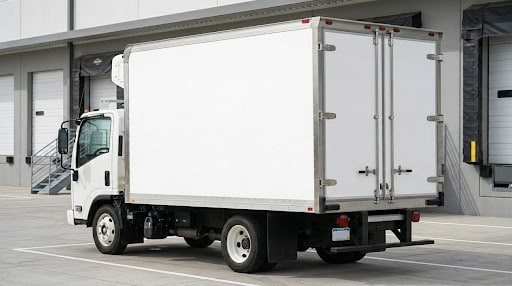


The majority of businesses view cold chain logistics as an operational function to be addressed at the lowest possible cost, rather than a capability to be strategically invested in. Such a view leaves a significant competitive advantage unexploited. In industries where the integrity of products, adherence to regulations, and reliability of deliveries directly impact client retention, the choice of a transport partner influences outcomes that extend far beyond the loading dock. Refrigerated transport in Scotland is used in industries where the number of customer contracts won, retained, and lost is a key indicator of logistics performance.
Protecting Margins Through Reduced Losses
The spoilage of products in transit constitutes a direct financial loss that compounds across all consignments spoiled during transit over the course of one year of operation. Companies that use the services of transport companies whose cold chain facilities are not reliable enough to maintain the required temperatures at all times pass these losses as a normalised cost, but not as a recoverable margin lost due to poor logistics choices. By joining forces with a provider whose specifications for the vehicle, monitoring, and operational procedures effectively eliminate excursion risk, this variable loss is transformed into a fixed, predictable cost, which enhances margin performance without necessitating any adjustment to either product pricing or internal operations.
Compliance as a Market Access Requirement
Controlled industries such as pharmaceutical distribution, food production, and clinical diagnostics have frameworks in which cold-chain compliance documentation is not just an administrative requirement but a prerequisite for market participation. Customers in these industries have their suppliers audited, demand temperature documentation and evaluate the compliance credentials of their transport partners before issuing contracts that less-regulated businesses might assume. A transport company that can provide certified, auditable cold-chain performance presents market opportunities that competitors whose logistics cannot be demonstrated to the same level of evidentiary rigour can at best crack open the door to.
Client Retention Built on Operational Confidence
Companies that have a record of delivering products in specification condition develop a reputation for quality that is either maintained by their logistics partner or silently compromised. One high-profile delivery failure, with signs of temperature variation or apparent product damage, leaves clients in no doubt that even the longest follow-up reliability issues can never be fully resolved. Choosing a transport partner with a performance history that warrants real trust safeguards the client relationships on which revenue forecasting relies, rather than exposing those relationships to the periodic risk of logistics failures that the supplying business itself cannot directly influence.
Response Capability When Disruption Occurs
Regardless of route planning and vehicle maintenance, transport operations are disrupted. The distinguishing aspect of the logistics partners is not the lack of disruption but the speed and competence of reaction. The effects of operational incidents can be contained within the cold chain provider before they reach the client, provided the provider has documented contingency plans, access to backup vehicles, and real-time monitoring infrastructure that can identify issues as they arise, not at delivery. Those partners who lack this ability amplify any disturbance into a problem facing the client, rendering the supplying business unreliable in situations that it did not actually create.
Reputation Transferred Through Supply Chain Association
The way customers view a business reflects not only how the business behaves but also the standards of all partners whose performance is involved in the product before it reaches the final recipient. Being punctual, in good condition, and with record-keeping that demonstrates adherence to cold chain management sends a message of professionalism that clients will relate to the supplying business, not to the transport layer at the bottom of the iceberg. On the other hand, issues that begin in the logistics chain and cause delivery problems hurt the supplier’s reputation, no matter where the operational responsibility truly lies, and the choice of transport partner is as much a reputational as a logistical choice.
Scalability and Seasonal Demand Management
The demand patterns encountered by food producers, pharmaceutical distributors, and fresh produce businesses all impose uneven demand on the cold chain capacity of the business over the calendar year. A logistics partner that is truly scalable and can absorb volume increases during peak times without affecting the temperature control standards used during quieter trading will avoid the seasonal quality decline that occurs when capacity limits are reached by compromising on monitoring or vehicle specifications. Companies whose logistics providers cannot match their demand curve face the unpleasant choice of either rejecting peak-season business or bearing a higher risk of product loss during their most commercially sensitive periods.
Selecting for Long-Term Partnership Value
The choice of a cold chain transport partner, largely based on rate comparisons, treats a strategically important relationship as a commodity acquisition decision. The actual cost of a logistics relationship involves spoilage rates, exposure to compliance risks, effects on client relationships, and the reputation that dependable delivery performance adds to any business relationship it touches. Companies that consider potential partners across all these aspects always discover that the provider that delivers real operational excellence is the better financial option over a realistic partnership term, regardless of where headline rates are relative to less competent options.