
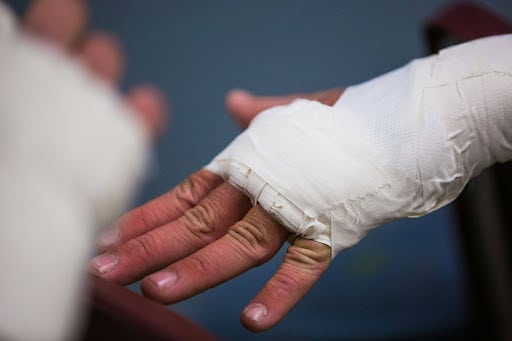
Hand injuries have profound repercussions. Since the hands are used for nearly all tasks during a workday, injuries to them can have an impact on everyday functioning, earning potential, and freedom in ways that injuries to other body parts may not. Injured people can identify when compensation may be available and what evidence supports successful hand injury claims by being aware of the situations that lead to hand injury claims.
Workplace Machinery Accidents
There is a significant danger of hand injuries from the machinery used in manufacturing, construction, food processing, and agricultural settings. When not properly guarded or maintained, cutting equipment, presses, conveyors, and spinning components can result in lacerations, crush injuries, degloving, and amputations.
Employers are required by law to make sure that machinery is equipped with the right safeguards, that those guards are kept in good working order, and that employees are properly trained before using equipment. The grounds for a compensation claim are clear when these duties are not fulfilled, and a worker suffers a hand injury as a result.
Because the employer’s awareness of the risk may be proven, injuries caused by machinery that has been altered to circumvent safety safeguards or in cases where known faults were reported but ignored, are subject to very strict liability.
Slips, Trips, and Instinctive Reactions
Direct contact with dangerous equipment is not the cause of all hand injuries in the workplace or public liability situations. A sizable percentage result from trips and slips in which the wounded person reflexively reaches out to break a fall.
This protective reflex frequently results in nerve injury, ligament tears, and fractures of the wrist and hand bones. Impact pressures that the body instinctively reroutes away from the head and torso are absorbed by the hand, but the structural effects can be severe and persistent.
The same rules that apply to other slip and trip claims also apply to liability in these situations. The entity in charge of maintaining the surface where the fall happened must have failed to address a hazard that a reasonable inspection and maintenance would have detected and rectified.
Hand Arm Vibration Syndrome
Long-term usage of vibrating instruments causes a degenerative disorder that affects the hands and arms’ joints, blood vessels, and nerves. Long-term exposure to tools like grinders, pneumatic drills, chainsaws, and similar machinery can cause hand-arm vibration syndrome.
Persistent tingling, numbness, weakened grasp, and blanching of the fingers in cold weather are among the symptoms. Since the condition cannot be reversed once it has been established, employers have a clear obligation to avoid it by appropriate exposure control and routine health surveillance.
Evidence that exposure levels exceeded safe limits over an extended period of time and that the employer either neglected to monitor exposure, failed to provide adequate rest intervals, or continued assigning vibrating tool work despite being aware of developing symptoms is necessary for claims resulting from hand-arm vibration syndrome.
Cuts and Lacerations From Inadequate Protection
A significant portion of industrial hand injury claims are related to hand cuts sustained while using sharp objects, equipment, or tools. Cutting hazards are present in construction, metalworking, glass handling, and food preparation. Safe handling practices and the availability of suitable gloves are intended to mitigate these risks.
Injuries resulting from an employer’s refusal to supply appropriate cut-resistant gloves for duties that clearly demand them or where work practices expose employees to cutting hazards that procedure improvements would eliminate support a valid claim.
Crush Injuries in Manual Handling
When heavy things are loaded, unloaded, or moved, hands can become caught between objects and sustain crush injuries that can result in fractures, soft tissue damage, and long-term issues with grip and dexterity.
In workplaces where such actions take place, manual handling risk evaluations are mandated by law. Employer culpability for ensuing injuries is much simpler to prove when these evaluations have not been completed, their recommendations have not been put into practice, or employees have not received manual handling training suitable for their jobs.
Establishing a Claim After a Hand Injury
The validity of a hand injury claim is largely dependent on the evidence acquired in its aftermath, regardless of the cause. Witness statements, accident report forms filled out at the time of the incident, medical records detailing the type and severity of the injury, and photographic proof of the dangerous conditions all help to construct a case that accurately depicts the circumstances and the effects of the injury sustained.
Seeking legal counsel as soon as possible following a hand injury guarantees that evidence is preserved before it is lost and that the three-year statute of limitations is adhered to without undue pressure.